San Francisco Bay Area bridge tolls continue to rise
Regional News

Audio By Carbonatix
5:10 PM on Thursday, November 19
(The Center Square) - San Francisco Bay Area commuters will see tolls rise as high as $10 as California looks to keep critical bridges financially afloat.
The toll increases are part of a years-long plan to incrementally raise the region's toll prices to offset pandemic-era revenue hits.
“We recognize that toll increases are unpopular,” Metropolitan Transportation Commission spokesperson John Goodwin told The Center Square. The MTC oversees the Bay Area Toll Authority, which approved the toll increase.
“But the fact remains that we and our partners at Cal Trans [California Department of Transportation] are obliged by state law to keep the toll bridges structurally sound and in good repair," Goodwin said.
On Jan. 1, drivers will see toll prices jump by 50 cents from $8.50 to $9 when paying by FasTrak, by 75 cents to $9.25 for drivers paying by license plate and $1.50 to $10 for drivers paying by invoice.
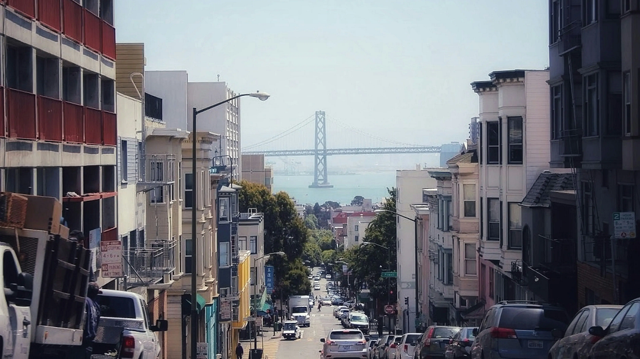
In 2024, the Bay Area Toll Authority approved the five-year toll increase from $8 in 2025 to $10.50 in 2030, doing so in annual 50 cent increments. The climbing toll prices affect seven of the Bay Area’s eight bridges: the San Francisco-Oakland Bay Bridge, the Antioch, Benicia-Martinez, Carquinez, Dumbarton, Richmond-San Rafael and San Mateo-Hayward bridges.
The Golden Gate Bridge, which also recently increased tolls by 50 cents from $9.75 to $10.25 for FasTrak, is governed by separate state agencies.
According to the BATA, much of the financial issue for BATA came from missed toll revenue during the COVID-19 pandemic and post-pandemic years, an estimated $200 million annually.
“BATA has had, in the post-pandemic period, to borrow money and use its borrowing power to cover maintenance costs,” said Goodwin. “And that's not sustainable.”
With the oldest Bay Area bridge 90-years-old, maintenance costs have grown over the years. BATA’s 10-year bridge preservation plan includes $726 million in painting to protect steel structures largely from rust, $383 million for bridge integrity work, such repairs for cables and fenders, and $583 million for all other work, such as the open-road tolling updates under FasTrak.
“The bridges themselves are getting older, and as they age, the cost of maintenance increases – kind of like with people,” said Goodwin.
Between 2021 and 2025, BATA borrowed $560 million to fund bridge rehabilitation efforts, with an additional $600 million in debt financing for projects planned if the toll increases were not approved. The agency said this would lead to approximately $690 million in interest payments on the debt over the coming years, which would require toll increases down the road.
“We think it's better to spend that money on paint than on interest,” said Goodwin.
But as with many public projects, questions have been raised about BATA’s spending efficiency.
“We've got government agencies that don't manage their budgets very efficiently, and they just seem to constantly come back to taxpayers to pay for their existing cost structure, without improving efficiencies,” Steven Greenhut, a senior fellow at Pacific Research Institute’s Free Cities Center, told The Center Square.
One-dollar tolls were first approved for the seven bridges in 1997. If prices were based purely on inflation and consumer price increases over that 29-year period, tolls would be $2.07, according to the Inflation Calculator website.
Greenhut said tolls are a reasonable way to pay for infrastructure, but added that they are a regressive tax that have an outweighed impact on poorer drivers. “It's the same price whether you're rich or poor.”
BATA further increased prices on non-FasTrak paying customers for the first time this coming year, citing higher prices to process invoices and license plate payments. Roughly 74% of drivers use FasTrak, which they said they would like to see further grow.
“It's good for us, and it's good for the customers too,” Goodwin said of FasTrak. Interested drivers can sign up on the FasTrak website.
Goodwin added that because in-person tolling booths will no longer be used, the digital-scanning technology for FasTrak allows for a quicker driving experience for drivers.
Truck drivers will see similar incremental toll increases. Drivers of vehicles with three axles are charged $30.75 with FasTrak, as well as $10.25 per additional axle.