Shipyards, refiners disagree with extension of Jones Act waiver
Regional News

Audio By Carbonatix
12:52 PM on Tuesday, August 11
Alton Wallace
(The Center Square) - U.S. President Donald Trump extended a temporary waiver of the Jones Act, a 106-year-old law that limits shipments of goods between American ports to domestically built vessels, but the middle-ground compromise dissatisfied both Gulf Coast oil refiners and the nation’s shipbuilders.
The extension replaces broad exemptions from Jones Act laws ordered by President Trump in March with a case-by-case review process managed by the Pentagon and the U.S. Maritime Administration. While the law typically requires American-built and crewed ships, it allows the federal government to issue temporary waivers during national emergencies, natural disasters, or major supply disruptions.
The waiver was set to expire on August 16 as the United States war with Iran continued into its sixth month.
For U.S. refineries, primarily producers of gasoline, diesel, jet fuel and other distillate fuels, the new system delays shipments because often days-long efforts are required to determine if all domestic vessels have been verified as unavailable. Maritime industry groups, on the other hand, argue that any extension undercuts American national security and reduces U.S. shipbuilding jobs.
Kristin Whitman, senior vice president of government relations at the American Petroleum Institute, released a statement backing the administration’s decision.
“We commend the administration's leadership in extending the Jones Act waiver, a critical action that will keep American energy moving, strengthen supply security and help protect consumers from unnecessary price volatility,” Whitman said.
Louisiana Republican lawmakers, including House Speaker Mike Johnson and House Majority Leader Steve Scalise, had actively pressed the Trump administration to let the waiver expire entirely. They warned in a letter sent to the President that continued use of foreign exemptions could weaken the domestic shipping fleet and undermine the Jones Act's core national security goals.
The letter, signed by the two Louisiana congressional leaders and 49 other House Republicans, called on the Trump administration to “utilize alternative policy tools to address fuel and fertilizer costs while preserving the strength of the American maritime industry.”
According to Argus Media, a provider of data and analysis on energy and commodities, U.S. Maritime Administration data shows that about half of the 212 documented voyages issued a waiver this year through Aug. 7 simply cited broad coverage under the program in their applications, while only 19 entries noted that domestic vessels were unavailable.
While Gulf Coast lawmakers fight the policy, market data reveals that the primary beneficiary of the waiver has been the West Coast. The vast majority of the exempted voyages carried fuel from Texas and Louisiana to California, where local inventories have plummeted to historic lows amid the Iran conflict and recent local refinery closures.
Energy cargoes sent from the Gulf Coast to the West Coast under the waiver saved an estimated 6.6 cents per gallon versus transport by Jones Act tankers, according to an analysis by Argus. This compares with a national average savings of about 2 cents per gallon due to the waiver, according to industry estimates.
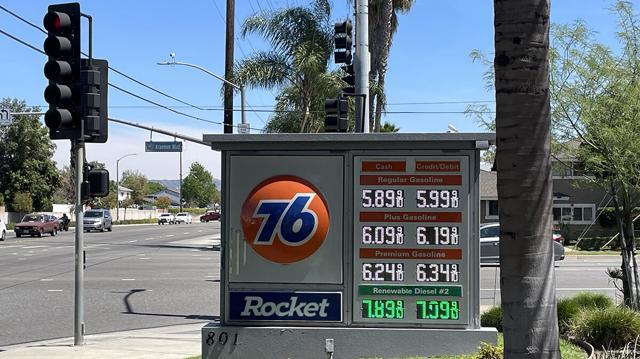
According to AAA, the national average retail price of regular gasoline was at $4.01 on Tuesday, while California drivers paid $5.59 per gallon.
American Maritime Partnership President Jennifer Carpenter said her organization is “disappointed that the waiver has been extended when the public record is clear: the waiver has not lowered fuel prices for American consumers and has been used to increase oil traders' margins, not meet military needs.”
Carpenter said the waiver’s expiration “is essential to putting American workers and taxpayers first.”
The Trump administration first issued the Jones Act waiver for energy shipments in March on national security grounds before extending it another 90 days in May, as reported here by the Center Square.
The Cato Institute, a free-market think tank, argued that the administration's limited waiver extension does not solve the root issue, urging Congress to permanently repeal or overhaul the 1920 shipping law.
“The Jones Act waiver has unleashed domestic commerce the law blocked for a century,” the organization said in a statement on Monday. “But a temporary, product-specific waiver is just a band-aid."