Supreme Court Upholds State Laws Barring Biological Males from Girls’ Sports
Michael Foust

Audio By Carbonatix
By Michael Foust, Crosswalk.com
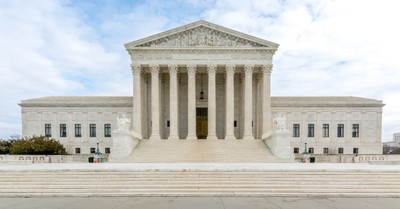
The U.S. Supreme Court on Tuesday upheld state laws barring biological males from competing on female sports teams, capping years of legal and political battles over fairness in women's athletics and transgender identity.
The court, in a 6-3 decision, upheld as constitutional laws in Idaho and West Virginia that bar biological males from competing on female athletic teams in public K-12 schools and colleges and universities. The challenges were brought by biological males who identify as female: a Boise State University student in Idaho and a middle school, later high school, athlete in West Virginia – and who asserted the laws violated not only the Equal Protection Clause of the Fourteenth Amendment but also Title IX, the 1972 federal law prohibiting sex discrimination in federally funded education programs.
Justice Brett Kavanaugh, in writing the court’s majority opinion, said both Idaho and West Virginia have concluded that women and girls “should be allowed to compete for those life-changing opportunities on an equal playing field, without fear of physical injury from biological males or being forced to compete against biological males.”
“Consistent with Title IX and the Equal Protection Clause, we hold that the States may maintain women’s and girls’ sports for biological females,” he wrote.
Kavanaugh was joined by the other members of the court's conservative bloc: Chief Justice John Roberts and Justices Clarence Thomas, Samuel Alito, Neil Gorsuch, and Amy Coney Barrett.
“The Constitution and Title IX do not require an overhaul of women’s and girls’ sports throughout America,” Kavanaugh added.
The court's three liberal justices concurred with the majority on the Title IX claim, meaning all nine justices agreed that the Idaho and West Virginia laws do not violate the landmark federal law. They dissented, however, on the Equal Protection Clause of the Fourteenth Amendment, arguing that the laws unconstitutionally discriminate.
Significantly, the ruling does not impose a nationwide standard, leaving the issue to be decided on a state-by-state basis.
The issue isn't merely theoretical. In California, a biological male who identifies as female, AB Hernandez, won state titles in the girls' triple jump and high jump in both 2025 and 2026. In Washington, another biological male who identifies as female, Verónica Garcia, captured the girls' 400-meter state title in both 2024 and 2025.
Although California and Washington can maintain their current policies under the ruling, it may encourage other states that had held back – perhaps fearing legal challenges – to pass laws similar to those of Idaho and West Virginia.
All in all, 27 states have laws banning biological males on female teams, according to the Movement Advancement Project.
The decision marked the latest in a series of Supreme Court victories for traditionalists in cases involving LGBT issues, following rulings in 2023 allowing a website designer to decline to create websites celebrating same-sex weddings on First Amendment grounds, and in 2025 upholding Tennessee's ban on gender-transition treatments for minors.
Photo Credit: ©Getty Images/Brian PIrwin
Michael Foust has covered the intersection of faith and news for 20 years. His stories have appeared in Baptist Press, Christianity Today, The Christian Post, the Leaf-Chronicle, the Toronto Star and the Knoxville News-Sentinel.
Listen to Michael's Podcast! He is the host of Crosswalk Talk, a podcast where he talks with Christian movie stars, musicians, directors, and more. Hear how famous Christian figures keep their faith a priority in Hollywood and discover the best Christian movies, books, television, and other entertainment. You can find Crosswalk Talk on LifeAudio.com, or subscribe on Apple or Spotify so you never miss an interview that will be sure to encourage your faith.